Quick Answer
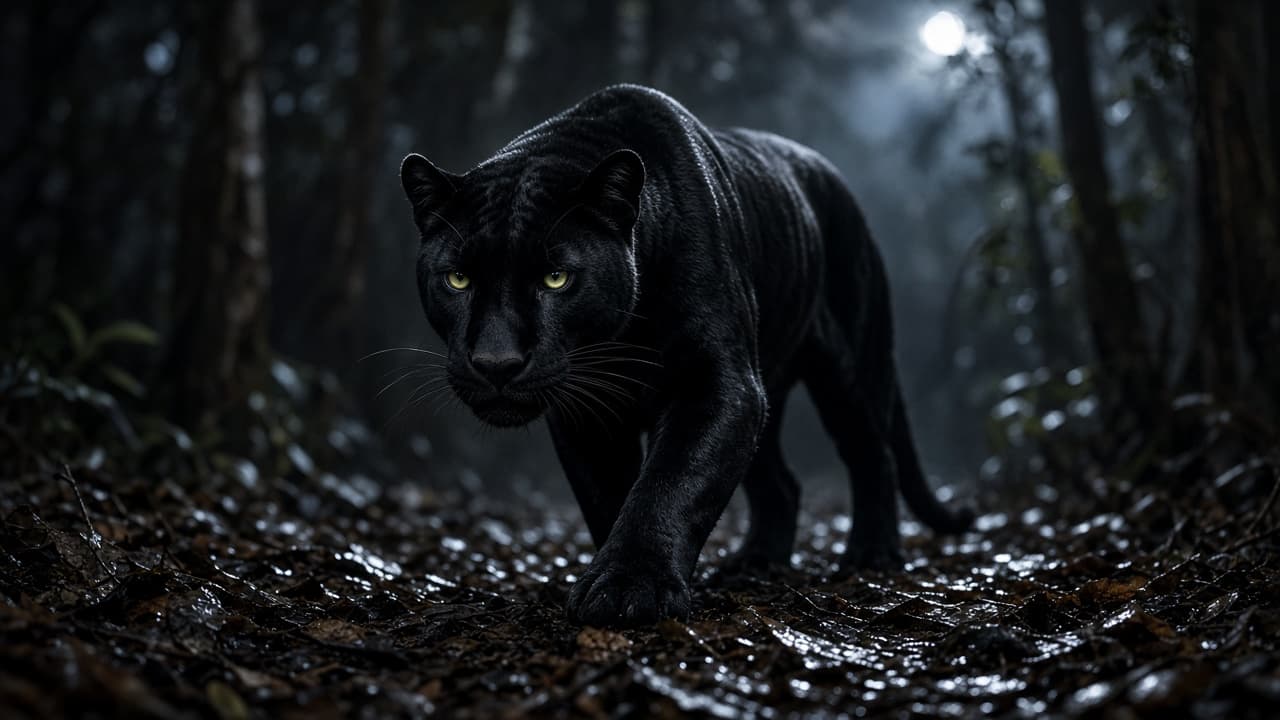
A black panther is a [cat](/dreams/cats) idea given serious weight: night-coloured, close to the ground, built for a strike you may not see in time. In dreams it usually holds elegance and threat together, power that does not need a mane or a speech. You can admire it. You can also be food. Whether it walked with you, watched from a branch, or arrived as a blur decides if this is owned strength, stalked anxiety, or both in the same coat.
Walking With You
The animal is at your side, matching pace, not performing. Companion power is a different plot from hunt.
This tends to arrive when a quality you used to treat as dangerous is becoming usable, anger that has a job, sexual selfhood that does not apologise, ambition that no longer needs to look nice, grief that has stopped being only tears. The panther is the picture of a force that can kill and is not currently killing.
If other people in the dream were afraid of your companion and you were not, you may be carrying a power your social world has not consented to. That gap is information. If you were afraid of the animal that was walking with you, ownership is incomplete. You have the image. You do not yet have the leash, and panthers do not really leash.
Watching From Above or From the Dark
A tree, a roof, a doorway you did not look at. The panther is still. You are the one in motion.
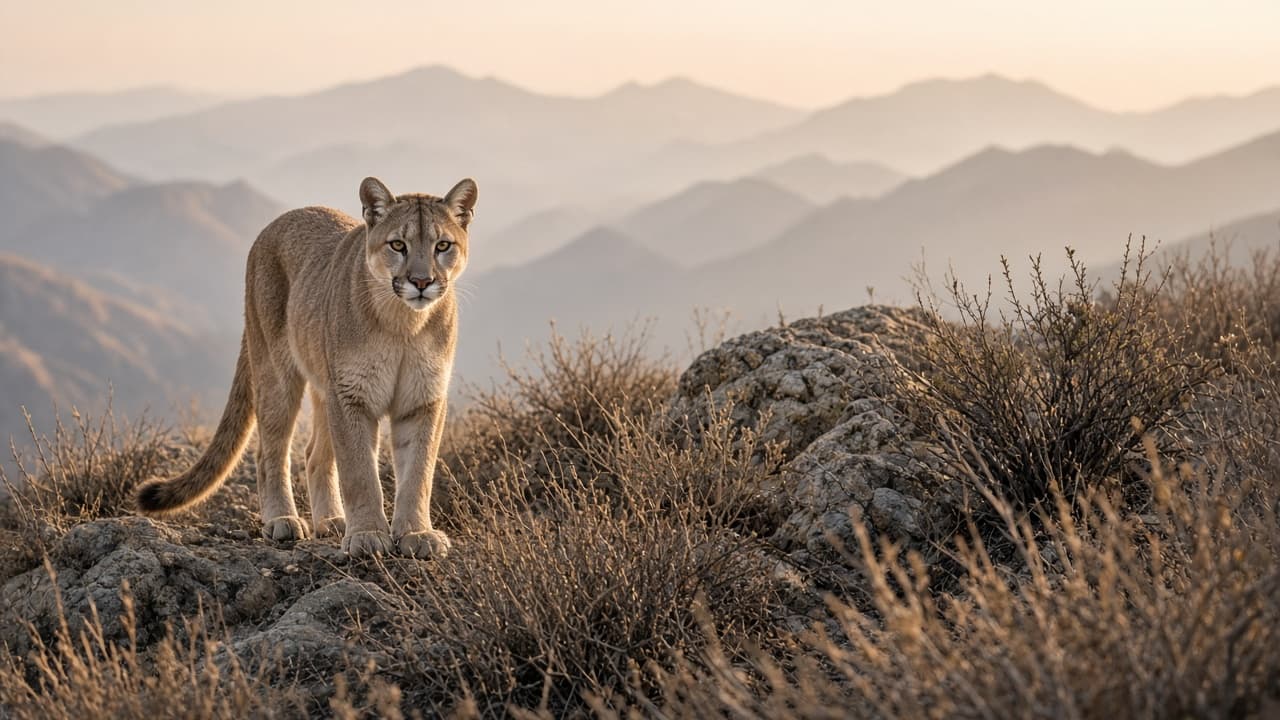
Being observed by a night predator is a vigilance dream with style. Something more patient than you is interested in your path, a rival, an appetite of your own, an institution, a person who does not announce themselves. Compare mountain lion dreams; the urban or interior version often uses panther because the threat has entered architecture.
If you made eye contact and the animal did not move, you have been seen and not yet chosen as prey. That pause is a useful waking question: what is watching, and what would a strike look like if it came?
The Attack
Speed, weight, breath, a silence beforehand. Attack dreams are threat-simulation wearing a beautiful animal.
Revonsuo's frame is fair here: big cats are ancestral enough, and media-familiar enough, to be excellent rehearsal predators. If you have been watching nature footage, start with continuity. If you have not, ask what in your life currently has this combination, attractive, competent, and able to end you in a social or emotional sense.
Fighting back is agency. Freezing is a nervous system fact, not a character judgement. Waking at the moment of contact is common and often means the psyche will not run the wound in full. You still have the information: this force gets that close.
You Are the Panther
Muscles, night vision, a hunt that makes sense from the inside. Identification with the predator is a power dream, and it makes some people uneasy in the morning.
Unease is allowed. Owning strike-capacity, a legal move, a resignation, a sexual no, a piece of art that will not be kind, can feel like becoming the animal you were raised to admire from a sofa. If the hunt was clean and you were not cruel for sport, you may be rehearsing a necessary use of force. If you were toying, the dream is more about contempt and the pleasure of having someone smaller.
People who have been prey for a long time sometimes get this reversal as compensation. It can be a step toward agency. It can also be a fantasy that never has to become a daylight skill. Check which.
Have a Black Panther dream of your own?
Write what you remember and get a clear reading.
Elegance First | Coat, Movement, Beauty
The dream is almost a fashion plate. The threat is there and the looking is the point. Beauty as power.
This appears around glamour, competence, and people (or selves) who are dangerous partly because they are composed. A workplace star. A seduction. A version of you that has learned to move through rooms without explaining. Adoration in the dream can be a wish to have that composure, or a warning that you are hypnotised by it.
Trying to touch the coat is a specific impulse: you want contact with the power without the hunt. Sometimes that is intimacy. Sometimes it is how people get bitten.
In the House, in the City, in a Cage
Habitat tells you how domesticated the force is allowed to be. A panther in a jungle is almost documentary. A panther in a kitchen is the night-instinct inside ordinary life. A panther in a street is power that does not have a proper biome. A panther in a zoo or a crate is power under someone else's lock.
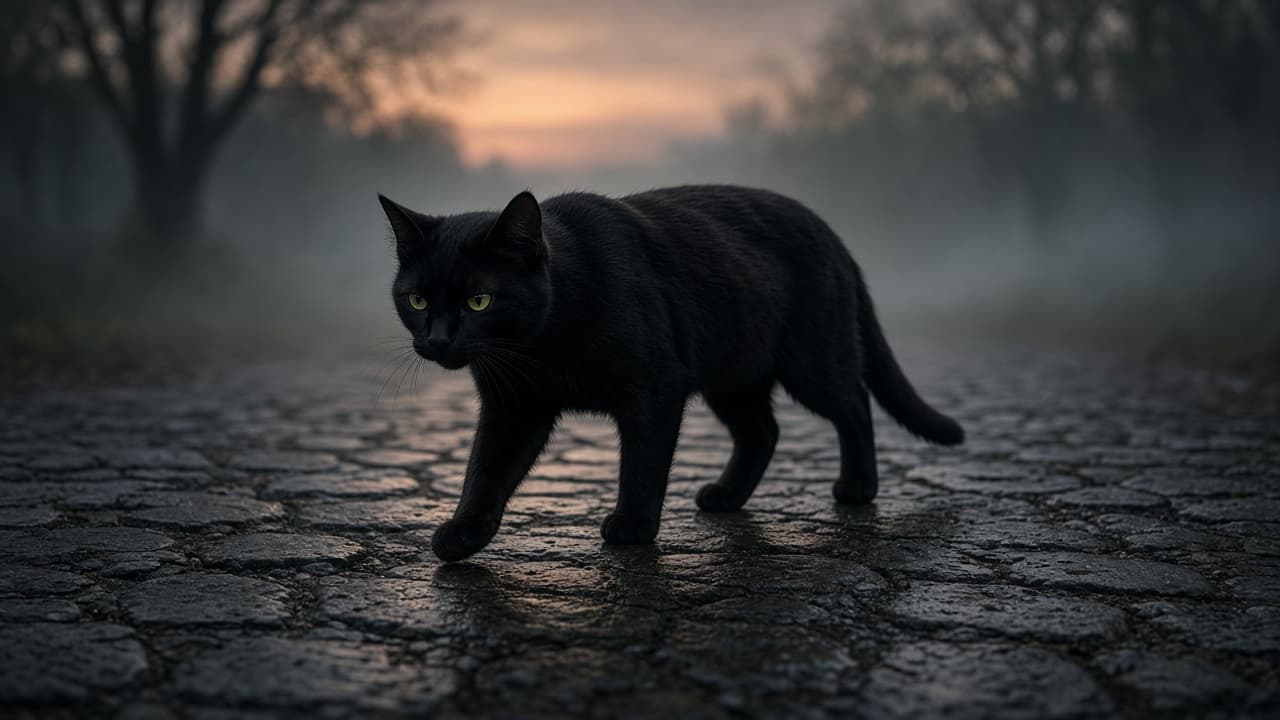
Indoor panthers often mark a household or a psyche where a large instinct is trying to live in rooms built for milder animals. See black cat for the smaller version. Caged panthers can be depression, professional constraint, or a family that will admire your strength as long as it does not walk around.
If you were the one who opened the cage, you have made a decision about risk. If you were the one locking it, you have made a decision about fear. Both can be wise. Both have a cost.
A Cub, a Coat, a Skin That Is Not Alive
Cubs are potential power, and they trigger care. A pelt, a rug, a photograph, a costume: the animal as object.
Protecting a cub is often about a new, still-vulnerable form of the same force, a beginning of anger, art, or selfhood that cannot hunt yet and will be destroyed if you treat it as already lethal. A skin on the floor can be trophy, grief, or a power you once had and now walk on. Wearing the skin is identification as costume. Ask whether it still fits.
Psychological Meaning
Carl Jung's 1959 writing on animal archetypes, and his 1964 popularisation in Man and His Symbols, treated large predators as pictures of instinctive energy that the ego has to relate to, not as mascots. A panther, in that vocabulary, is closer to a shadow-cat than to a heraldic lion: less solar, more nocturnal, less interested in your community's rules. The work is to have a relationship with it that is not only fleeing and not only fusion.
Antti Revonsuo's 2000 threat-simulation theory explains the attack and stalk versions without mysticism. The brain rehearses being hunted by something that is better at night than you are. Media supplies the species. Your week supplies the feeling of being outclassed.
Domhoff's continuity hypothesis covers the rest: people who love big-cat imagery, work with power, or are currently dealing with a sleek threatening person will dream panthers more. The animal is not a random spirit visitor. It is a high-quality picture of a force already in the file.
Read the dream as a report on power that hunts in low light. Are you walking with it, being watched by it, attacked by it, or wearing it? Those are four different jobs, and only one of them is costume.
When the Panther Keeps to the Same Path
A repeating panther is a repeating relationship to a specific force. Note the habitat and the role. If you are always prey, a waking boundary or a real safety plan is overdue. If you are always the animal and never a person in the morning, the power may be stuck in fantasy.
Give the force a daylight name that is slightly less glamorous, anger, lust, competence, a particular person, and take one action that is panther-like without being theatrical: a clean no, a finished piece of work, leaving a room. Recurrence often ends when the instinct has a job.
If the dreams are panics that replay actual assault or stalking, skip the elegance. That is threat memory. It belongs with people who treat nightmares as treatable, not as totems.