Quick Answer
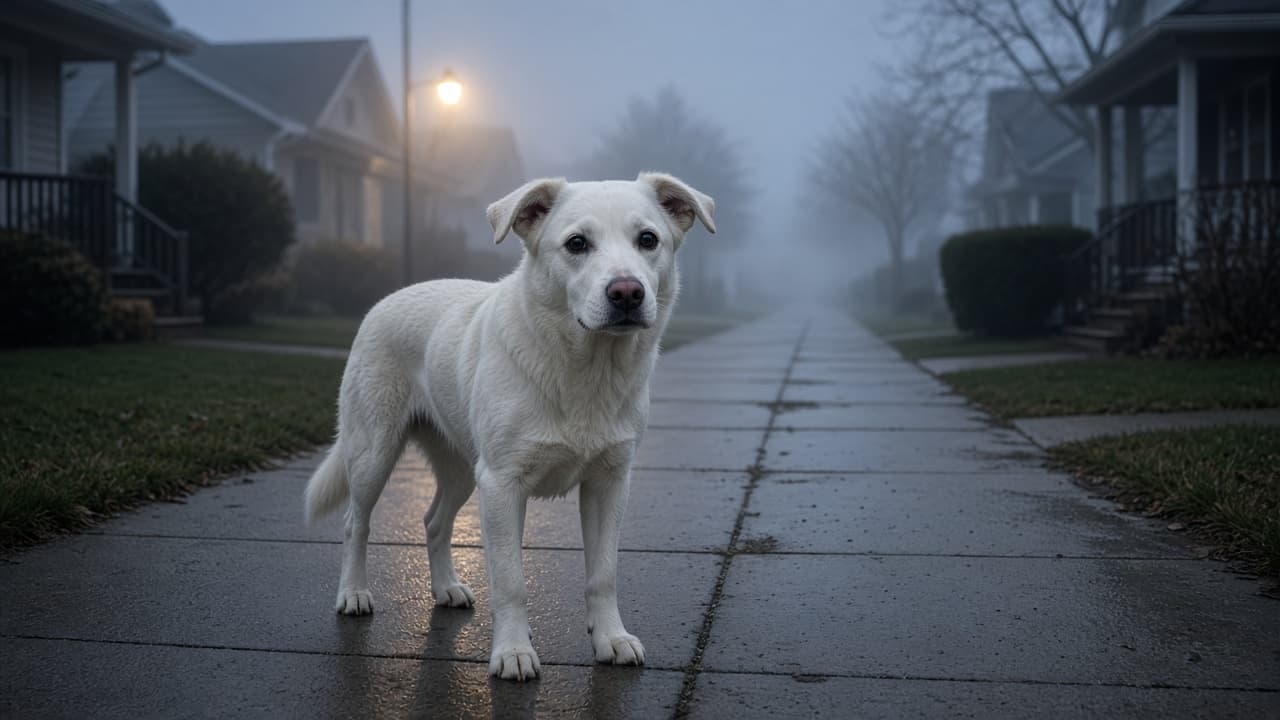
A white dog is a dog dream that leans on domestic loyalty made highly visible. Gentle versions feel like protection you can see coming. Lost versions are attachment you cannot currently find. Aggressive or "rabid" versions are the domestic contract breaking: the pet that was supposed to be safe. Colour is a highlighter, not a horoscope. If you live with a white dog, start with continuity, you dream what you live with, before you reach for symbols.
Family duties and companionship are usually closer than folklore.
A Gentle White Dog at Your Side
This is the loyalty-in-white scene: the animal walks with you, waits, leans. Paleness reads as clean, which can make the dream feel morally simple. It rarely is. Gentle dogs still have jobs. They guard, they please, they need feeding.
Ask what the dog wanted from you. A white dog that only gave affection is a different dream from one that insisted on being let in, walked, or hidden from other people. The first is support you are allowed to use. The second is a duty wearing a friendly coat, a parent, a partner, a role at work that looks like care and invoices you overnight.
If the dog was someone else's and still chose you, the dream may be about borrowed loyalty: you are relying on a bond that is not fully yours yet.
The Lost White Dog
A pale dog on a verge, in a car park, or running away through traffic is easy to see and still not in your hands. That combination is the point. White should make finding simple. The dream keeps it from being simple.
Searching is unfinished attachment. Dreamers report calling a name, using a lead that does not catch, seeing the dog across a road they cannot cross. The waking analogue is often a person who used to be reliably "home", a child at a new school, a partner travelling, a friend who went quiet, or a part of yourself that used to do loyal work (the people-pleaser, the family fixer) and has wandered.
Walking past a lost white dog is colder data. You saw the loyalty and did not claim it. That can be self-protection, not cruelty. Related loss scenes, without the animal, live on losing.
Rabid Versus Gentle: When the Coat Lies
"Rabid" in dreams is rarely veterinary. It is the sudden unsafety of foam, a changed gait, eyes that do not recognise you. A white coat makes the change more shocking because the animal looked like the safe one.
This is close-range threat from a domestic source. Compared with wolves, the horror is the broken house rule. Something that eats in your kitchen has turned. Read it as a relationship or a role, not as a disease forecast. People in recovery from betrayal, and people who are themselves exhausted of being "the nice one," both dream this.
If you had to lock the dog out, you were drawing a line. If you tried to nurse it, you were still in the old contract. If other people insisted it was fine while you could see it was not, the dream is about gaslighting with a pet as the prop.
Your Own Dog, But White
Colour changes on a known animal are identity edits. The dog is still yours. The job has been recast as visible, innocent, or ceremonial.
Owners should still check the simple explanation: you have been looking at your dog all week. If the real dog is not white, the dream is doing extra work. Paleness can mean you are idealising the relationship (the dog as pure loyalty) or fearing exposure (the dog as something everyone can see you care about). Grief versions, a living dog turned ghost-white, sometimes arrive when you are rehearsing loss you do not want to think about in daylight. That is anxiety, not a death notice.
If the white version of your dog would not come when called, the familiar loyalty is no longer on the old terms.
Have a White Dog dream of your own?
Write what you remember and get a clear reading.
A White Puppy
Puppies reset the timeline. Loyalty is not yet trained. A white puppy is a new bond that looks harmless and is already a responsibility.
These dreams cluster around new jobs, new relationships, pregnancies, and projects that other people find cute while you are the one doing nights. The paleness can add pressure to keep it unstained: do not mess this up, do not let the new thing get dirty. That pressure is often the actual subject.
If you lost the puppy in a crowd, the fear is incompetence at care, not mystical warning. If the puppy was huge, the "small duty" has already grown.
Guarding a Door or a Sleeping Person
A white dog on a threshold is classic guardian imagery, and it is still worth being specific. Whose house. Whose bed. Facing in or facing out.
Facing out is protection against intrusion, a reasonable dream during conflict, illness, or after a scare. Facing in, toward you, is more ambiguous: the loyalty may be monitoring you. Family systems that police reputations produce inward-facing white dogs. You are being kept "clean."
If the dog would not let you leave, guardianship has become captivity. If it would not let someone else in, you may be using loyalty as a lock. Compare with cats, which tend to grant or withhold affection without taking a shift at the door.
Dirty, Stained, or Injured White Fur
White that will not stay white is a maintenance dream. Mud, blood without a wound story, paint, oil, the animal is supposed to display innocence and cannot.
These scenes often accompany shame about a role that is advertised as pure: the good parent, the honest colleague, the friend who does not gossip. The dog is still doing the job. The coat is telling on the cost. Washing the dog is an attempt to restore the brand. Leaving it stained is closer to refusing the brand.
Injury without aggression (a limp, a closed eye) is a tired loyalty. Someone, possibly you, has been on duty too long.
Psychological Meaning
Antonio Zadra, Robert Pilon and Don Donderi's 2006 typical-dreams work, building on the classic questionnaire tradition, reminds us that animal encounters are common dream content, not rare visitations. Dogs are among the animals people actually live with, which is why dog dreams are so often continuity before they are metaphor: owners dream dogs.
White then does cultural work. In many Western settings it signals cleanliness, weddings, hospitals, and "good" pets. The dreaming brain can use that palette to talk about reputation and care. It can also just be the colour of the dog on the sofa.
Hall and Van de Castle's older content analysis already showed that animals in adult dreams often carry social and aggressive themes. A white aggressive dog is not a paradox in that system. It is aggression in a costume of safety.
When the White Dog Keeps Coming Back
Recurring pale dogs usually mean a loyalty question is still open: who is looking after whom, and what happens if the gentle thing is not gentle. If you have a real white dog, check their week, vet, absence, a scare, before you interpret your character.
If you do not, name the domestic bond the dream is using. Feed it, fence it, or admit it is lost. The dream tends to quiet when the waking arrangement is honest, even if the arrangement is sad.


