Quick Answer
Dreaming that your car was stolen usually means a means of movement has been taken: the job that got you out of the house, the independence a licence represents, the identity that sat in that particular driver’s seat. An empty space is a different dream from a chase. Keys left in the ignition are a different dream from a smashed window. If your real car was recently broken into, allow for residue. Then ask what, besides metal, you can no longer use to leave.
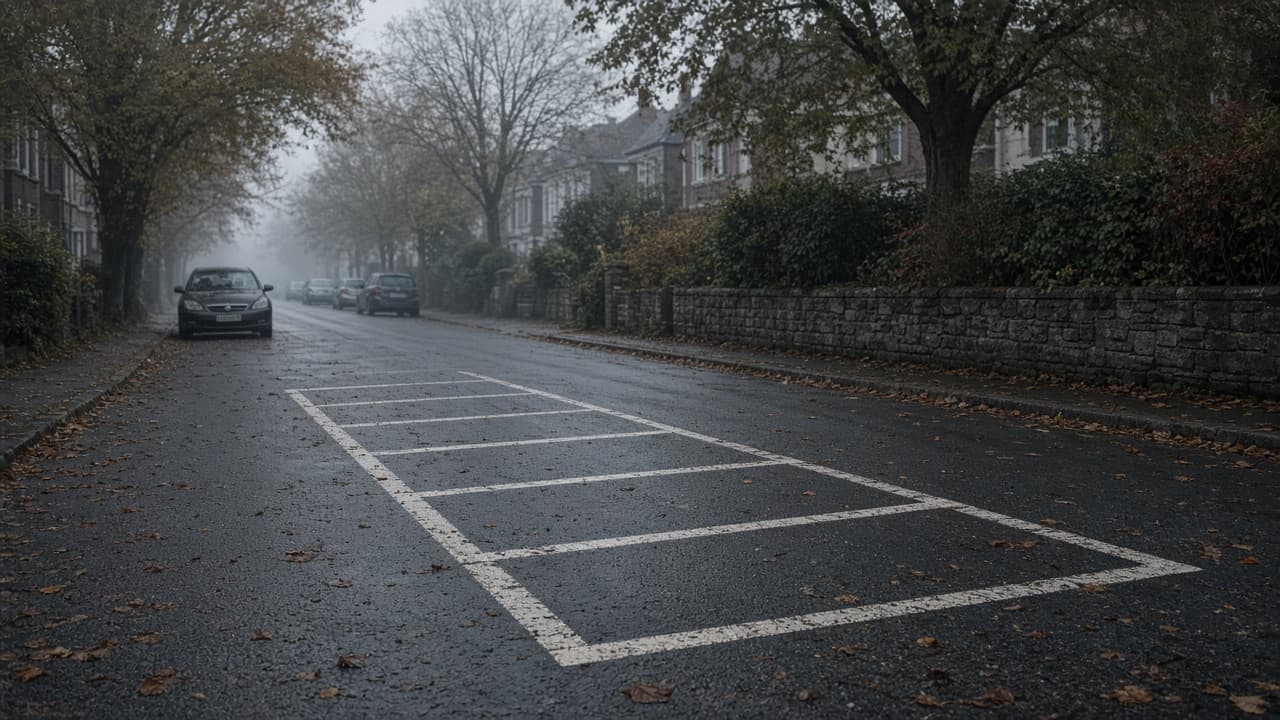
Finding the Parking Space Empty
The commonest version has no thief in it. You return to a street, a driveway, a work car park. The outline is there. The vehicle is not.
Absence is the meaning. Something you counted on as a given of adult life has been withdrawn without a scene. Waking matches include a job that vanished as an email, a relationship that ended by silence, a privilege you did not notice was a privilege until it was gone, a parent’s car, a company vehicle, a city you could afford. The dream reproduces the stupid, practical panic: how do I get home, how do I get to the thing I am supposed to be.
If other cars were still there, the loss is personal, not apocalyptic. If the whole street was empty, you may be dreaming a wider collapse of means.
Watching It Happen
You see the person. You are behind glass, across a road, in a doorway. The car starts. It leaves with someone else’s posture in your seat.
Helpless witnessing maps onto losses with a visible agent: a colleague taking credit and the client, an ex taking the social world, a sibling taking a parent’s attention, a company taking a project you built. You are informed, and you are not in the cabin.
Whether you ran, filmed, shouted, or bargained splits the remaining agency. Running toward a moving car is a particular kind of hope. Letting it turn the corner is a particular kind of grief. Both can be accurate.
The Keys Were in It
This detail is a confession the dream already extracted. Access was left available. You made it easy, or life made it easy, and the night will not let you skip that.
Keys-in dreams cluster around over-trust and exhaustion: passwords shared, a door that is never locked because locking would mean admitting the neighbourhood changed, a role you left logged in, a relationship with no hard edge. It is not always self-blame. Sometimes the “keys” were a system that required you to remain startable by other people, on-call work, family logistics, a car that was never only yours.
If you were hunting for spare keys afterwards, you are already in problem-solving. If you sat down on the kerb, you may need a night of admitting the start-up sequence is gone.
Stolen From the Driveway Versus the Street
Location names the boundary. A street theft is public-world risk. A driveway or garage theft is home failing as a perimeter.
Driveway dreams attach to losses that happen where you thought you were allowed to rest: a partner using shared resources, a family member “borrowing” without returning, work reaching into evenings, a house that is not actually a house in the safe sense. Street theft more often tracks the ordinary brutality of a competitive environment, someone faster, hungrier, or more entitled in the open.
If neighbours watched and did nothing, add a layer: the social world did not treat your means as worth guarding.
Catching the Thief
Agency returns. You grab a sleeve, block a road, unexpectedly know kung fu, or simply stand in front of the bumper.
Confrontation dreams often arrive after a waking decision to stop being reasonable about a taking. They can also be wish-fulfilment: the night giving you a scene daylight has not allowed. Either way, recover what you said. Speech at the moment of catching is frequently the sentence you have been editing for weeks.
If the thief was someone you knew, do not leap to “they will steal from me.” Leap to “this person is currently in the seat of something I thought was mine”, a role, a story, a child’s loyalty, a reputation.
Have a Car Being Stolen dream of your own?
Write what you remember and get a clear reading.
Getting the Car Back, Damaged or Strange
Return is not always restoration. The car is in a field, a pound, a street you do not recognise. A dent. A smell. Different seats. Your name not on the papers.
Partial recovery maps onto jobs you got back with less dignity, relationships that resumed with less trust, bodies that returned from illness not quite as they were, visas and licences restored with new conditions. Gratitude and grief can share the driver’s seat.
If you hesitated to take it back, listen to the hesitation. Some recovered vehicles are not worth the insurance of remaining attached.
You Cannot Report It
Police stations that will not open. Forms that dissolve. Officers who laugh. A missing registration you never had.
Blocked reporting is about illegitimate loss: something taken that the official world does not count. Emotional labour. Credit for work. A childhood that was stolen in slow motion. A relationship benefit you cannot prove. The dream is recording the second injury, not only the taking, but the lack of a desk that will stamp it real.
If you finally found a person who took you seriously, notice who they resembled. Allies in these dreams are often underused in the day.
Someone You Know Took It, Calling It Borrowing
The thief uses a familiar moral vocabulary. Just for an hour. You weren’t using it. Family. Work.
Euphemistic taking is a common household and workplace pattern. The dream strips the euphemism by using a car, because a car is hard to minimise. You know whether you still have a way home. That clarity is the gift of the image.
If you agreed in the dream and raged on waking, the night may be showing the compliance you still perform. If you refused and the person looked shocked, you may be rehearsing a no that daylight still finds rude.
Psychological Meaning
Calvin S. Hall and Robert Van de Castle, in their content-analysis tradition (the 1966 coding system and Hall’s earlier The Meaning of Dreams), treated vehicles, possessions, and misfortune as countable features of dream life that track waking concerns about resources and mobility. A stolen car is a misfortune with a social agent. It scores, in their terms, as a loss of a tool of independence. You do not need their numbers to feel the fit: adults in industrial cultures store a remarkable amount of self in the right to leave.
G. William Domhoff’s continuity hypothesis then names the missing vehicle from your week. Lose a licence, a job with a commute, a relationship that was also transport through a social world, and the dreaming mind will not always invent a castle. It will invent an empty bay.
Freud’s older language of potency and castration is easy to overapply here, and still occasionally useful: for some dreamers the car is frankly sexual or status-coded, and the theft is a humiliation of display. Use that only if the dream’s emotion was humiliation rather than practical strandedness. Most stolen-car nights are about strandedness.
Practically: ask what used to start when you turned a key, a job, a marriage, a city, a version of yourself, and who else currently has that key.
When the Bay Stays Empty
Stolen-car dreams process missing means. They do not forecast a crime, and they are not a character test you failed by leaving the keys in.
If the same driveway keeps producing absence, name the waking equivalent in one boring sentence: the role, the money, the right to go. Then take one step that is actually about means, a document, a conversation, a spare arrangement, rather than about watching the corner harder.
If you wake stranded in the body, sit with that for a minute before you interpret. The feeling of no vehicle is the point. You can borrow a different metaphor in the morning. Tonight, the honest picture was an empty space, and empty spaces are allowed to make you angry.