Quick Answer
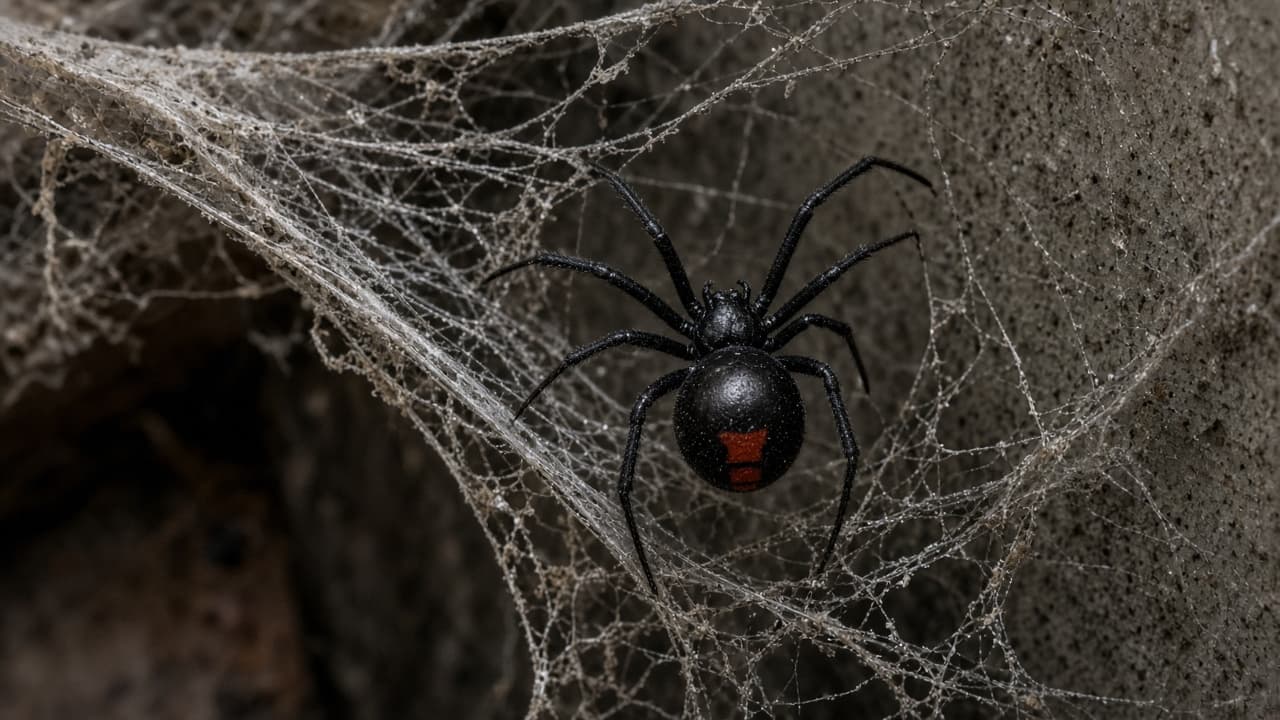
A black widow is not a generic [spider](/dreams/spiders). It arrives with an hourglass, a reputation for venom, and a pile of gendered folklore that most dreamers have already swallowed. The psychological job is usually precise, delayed harm, something small that keeps working after the animal is gone, plus isolation: this spider is famous for eating a mate and sitting alone. Deflate the folklore as you go. The dream is allowed to use a cultural monster. You are not required to believe the monster’s press.
Seeing the Hourglass Clearly
You identify it. Red mark on the abdomen, the name arrives in the dream with the sight. Recognition is the plot.
Being able to name the species is a dream about a threat that has a label. You are not dealing with “bugs.” You are dealing with a specific reputation, a person, a diagnosis, a legal category, a family role. The hourglass also reads as time: a mark that looks like a clock. Something is dated. Something is running.
If you felt oddly satisfied to have identified it, competence is in the mix. You would rather have a famous danger than an anonymous one.
A Bite That Worked Later
The bite is minor in the moment. Then the dream jumps, or you wake with the knowledge that the venom is still moving.
Delayed harm is the black widow’s useful metaphor even when your entomology is shaky. Real widow bites are medically serious in some cases and minor in others; dreams do not care about the statistics. They care about the story of a small puncture with a long sequel. Remarks, reviews, infidelities, and medical news all have that shape.
Where you were bitten still helps. Hand: work and agency. Neck: speech and exposure. Inner thigh or torso: intimacy and shame. Pair with blood only if blood was actually in the scene; widow dreams are often dry and clinical.
Isolation: the Spider, You, or Both
A widow in an empty garage. You in a house with no one to tell. A web in a corner nobody visits.
Isolation is native to this image. The folklore says the female sits alone after a deadly mating. Dreamers borrow that whether or not they could cite it. The scene may be picturing a relationship that ended with one person remaining in the structure, or a workplace where you have been left to handle the dangerous thing in a corner.
If you felt kinship with the spider, pause. Identification with the “widow” can mean you have been cast as the dangerous remainder, the one who survived a pairing, the one others are slightly afraid to sit with. That is a social role, not a species destiny.
Gendered Folklore in the Room
The dream lectures. Someone says “she kills the male.” You are shown a diagram. A woman in the dream is simply called a black widow.
This is folklore doing overtime. David J. Hufford’s 1982 work on how people experience and then narrate extraordinary night events is a useful cousin here: culture supplies a template, and the experience pours into it. Black-widow-as-woman is a template with a long, ugly history. If the dream used it, ask who in waking life talks that way, including a part of you that has absorbed misogynist shortcuts about desire and danger.
The educational move is not to pretend gender is absent. It is to refuse the omen: this is not proof that a woman will harm you, and not proof that you are toxic if you are a woman who dreamed she was the spider. It is a picture that your culture left lying around.
Have a Black Widow dream of your own?
Write what you remember and get a clear reading.
Web in a Corner of a Private Room
Closets, meters, woodpiles, the underside of furniture, widow habitat in the dream is unused space in a life.
Neglected corners map onto neglected problems: a stack of mail, a relationship you do not enter, a health screening you skip, a grief you stored. The spider is not the whole house. It is the place you stopped cleaning.
If you reached into the corner on purpose, you are in a competence plot. If you were bitten because you were looking for something else, the dream is about collateral contact with a stored threat.
Killing It, Scooping It, or Letting It Live
Method is character. A shoe is different from a jar. A jar is different from walking away.
Killing with panic often means you needed the reputation to end, not only the animal. Capturing it alive more often means you want the danger contained and inspectable, a conversation, a diagnosis, a boundary with a lid on it. Walking away can be wisdom or denial; the feeling in the doorway tells you which.
Compare scorpions: another small venomous specialist. Widows add the mate-eating story. If that story was loud in the dream, the relationship reading is more likely than a generic pest reading.
Psychological Meaning
Hufford’s 1982 The Terror That Comes in the Night is not a spider paper. It is a paper about how folklore and experience recruit each other. Black widow dreams are a clean case. The animal exists. The medical risk exists at a certain scale. Then a huge extra story about female danger, sex, and leftover mates gets poured on top. Dreamers wake sure they have been warned about a woman, or about themselves as a woman. That surplus is culture, not venom.
Ernest Hartmann’s contextualising image still fits the bite: a small precise harm that continues. Isolation fits people who are actually alone with a problem, or who have been socially punished after a pairing ended.
Stay with what the spider did. Identification, bite, corner, kill. Those four verbs will get you further than a femme-fatale sticker. If you have a real phobia of widows, the dream may be the phobia clocking in for a night shift. That is allowed to be enough.
When the Hourglass Keeps Showing
Repeating black-widow dreams often mean a labelled threat is still sitting in a corner you do not want to enter. Name the label in daylight, the person, the bill, the rumour, the role, and decide whether you are inspecting it, containing it, or leaving the room.
If gendered panic is the loudest leftover feeling, that is worth a waking conversation with yourself about which stories you inherited. The spider does not need those stories to be a spider.
A black widow dream is a picture of precise harm, time, and a folklore hangover. It is not a verdict on anyone’s sex. Describe the hourglass, the room, and whether you were alone if you want a reading that stays with your scene.